

This article explains how spousal caregiver support in Connecticut helps families recognize caregiver strain early and find practical ways to protect both partners while aging safely at home.
TLDR:
When one spouse becomes ill, caregiving responsibilities can slowly become overwhelming. Small supports like help with personal care, household routines, and scheduled relief time can reduce burnout and help spouses maintain their relationship while ensuring safety at home.
Introduction
Spousal caregiver support in Connecticut becomes important when daily responsibilities start shifting from shared routines to one partner carrying most of the physical, emotional, and household strain. What begins as helping a spouse often grows into a demanding caregiving role that affects both people.
Many spouses try to manage everything on their own because they feel responsible for their loved one’s well being. Over time, the strain can grow quietly until it begins affecting rest, routines, and overall stability at home.
Understanding the value of spousal caregiver support in Connecticut can help families protect their relationship while ensuring their loved one remains safe and supported at home.
How caregiving changes a marriage
When illness, memory changes, or mobility limitations appear, everyday tasks that once felt simple can become difficult. The healthy spouse often takes on new responsibilities like medication reminders, transportation, mobility assistance, meal preparation, and household management.
Over time, these changes can affect emotional connection, energy levels, and the ability to maintain routines that once brought comfort and stability to the home.
Common challenges spouses face when caregiving
Spousal caregivers often experience similar challenges as they try to balance care responsibilities with their own health and emotional well being.
- Physical exhaustion from assisting with daily care tasks
- Emotional stress from watching a partner struggle with health changes
- Loss of personal time for rest, hobbies, or social interaction
- Safety concerns related to mobility, medication management, or falls
- Changes in relationship roles that can affect communication and connection
According to the Alzheimer’s Association, family caregivers often experience increased stress and health risks when long term care responsibilities are handled without support.
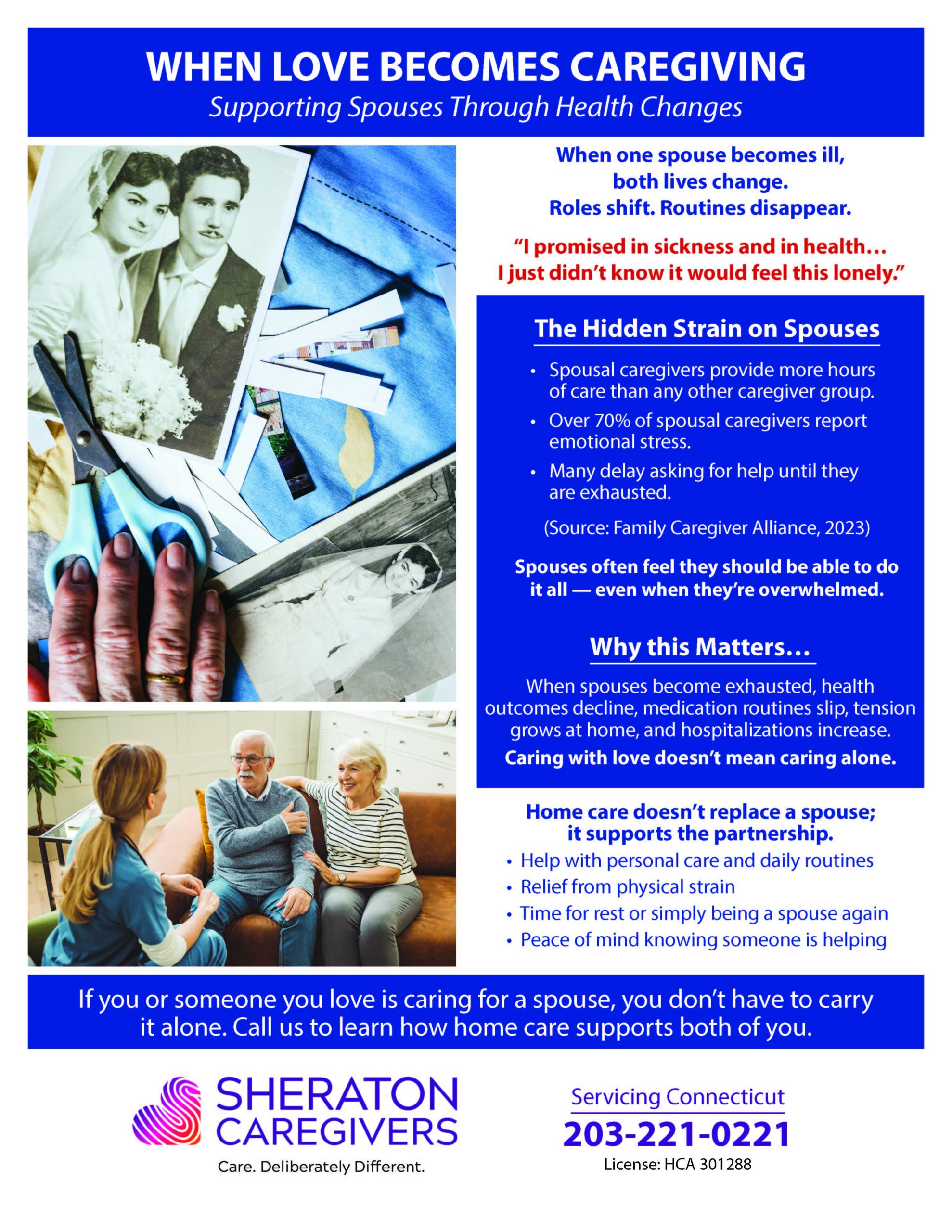
Why spousal caregiver support in Connecticut matters for aging safely at home
When caregivers become overwhelmed, daily routines can begin to slip. Meals may be skipped, medications forgotten, or mobility assistance rushed due to fatigue.
Early support allows couples to maintain routines, reduce stress, and avoid decisions that are made during medical emergencies or caregiver burnout.
Professional in home care services in Connecticut can help reinforce routines, assist with personal care, and provide relief so spouses can focus on their relationship rather than managing every task alone.
How to introduce additional support at home
Starting the conversation about help can feel difficult. Many spouses worry that accepting assistance means losing independence or changing their relationship.
A supportive approach often works best. Framing home care as extra help rather than replacement care allows couples to stay in control while improving safety and daily routines.
Would it help if someone came by a few hours a week to make things easier for both of us?
This type of conversation keeps the focus on shared wellbeing rather than limitations.
How spousal caregiver support in Connecticut helps families at home
Sheraton Caregivers works with families across Connecticut to create personalized care plans that adapt as needs change. Our caregivers support daily routines, mobility assistance, and household tasks while providing trusted relief for spouses.
Many families begin with hourly in home care so they can introduce support gradually while maintaining comfort and independence.
If you are looking for spousal caregiver support in Connecticut, small consistent help can make daily life more manageable while protecting both partners at home.
You may also find helpful guidance in our related article on caregiver support in Connecticut.
Soft next step
Families across Connecticut often begin exploring support when caregiving responsibilities start affecting daily routines or personal wellbeing. Early conversations can help couples maintain stability, safety, and connection while continuing to age at home together.