

Supporting Seniors Through Grief and Loss at Home
Grief can affect nearly every part of a senior’s daily life, making it harder to stay engaged, maintain routines, and feel emotionally secure at home. For families seeking grief support for seniors in Connecticut, recognizing these changes early can help ensure loved ones remain safe, supported, and connected.
In this blog, we will explore how grief may appear in older adults, why it is important to recognize the signs early, and how compassionate in home care services in Connecticut can help seniors feel more comforted and supported at home.
What Does Grief Look Like in Older Adults?
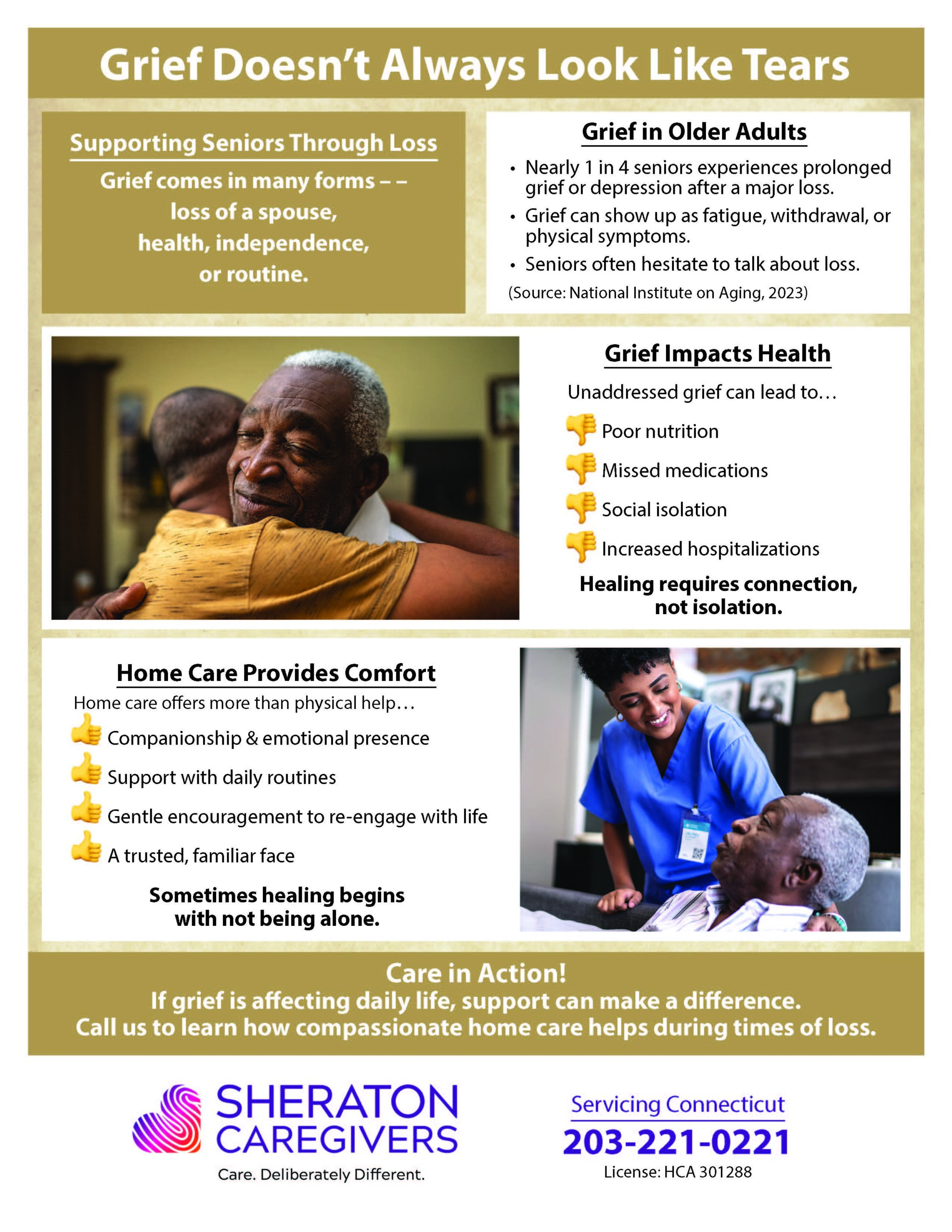
Grief in older adults does not always look like crying or openly talking about loss. In many cases, it appears through quiet changes in behavior, mood, energy, and routine. A senior who is grieving may become more withdrawn, less interested in social interaction, or less motivated to keep up with daily habits.
Some older adults may also experience physical symptoms such as fatigue, poor appetite, trouble sleeping, or a decline in overall engagement. Because these changes can be gradual, families may not immediately realize grief is playing a major role.
Why Is It Important to Recognize Grief Early?
When grief is not recognized early, it can begin to affect many areas of a senior’s life. Emotional distress may lead to missed medications, poor nutrition, social isolation, and difficulty maintaining healthy routines. Over time, this can impact both mental and physical well-being.
Recognizing grief early gives families the opportunity to provide support before the situation becomes more serious. For many families, grief support for seniors in Connecticut means ensuring their loved one is not facing loss alone and has the right support in place.
How grief support for seniors in Connecticut can help at home
Home care can provide meaningful support during times of grief by offering more than just physical assistance. A compassionate caregiver can bring companionship, routine, conversation, and emotional presence into a senior’s day. Sometimes, having a trusted person nearby can make a major difference in how supported someone feels.
Caregivers can also help seniors stay on track with meals, hydration, medication reminders, and light daily activities. Services such as hourly in home care can be especially valuable when grief begins to interrupt normal routines.
What Are the Benefits of Supportive Home Care During Grief?
Supportive home care offers several important benefits for grieving seniors and their families.
- Companionship and Emotional Presence Caregivers can help reduce loneliness by offering conversation, comfort, and regular human connection.
- Help with Daily Routines Seniors may need extra encouragement with meals, medication reminders, bathing, dressing, or light housekeeping when grief affects motivation.
- Improved Safety and Stability When routines are maintained, seniors are often safer and better able to remain comfortable in their home environment.
What Challenges Can Grief Create for Seniors at Home?
Although every person experiences loss differently, grief can create real challenges that families should not ignore.
- Increased Isolation A grieving senior may begin pulling away from family, friends, or activities they once enjoyed.
- Changes in Appetite or Medication Routine Emotional distress can make it harder to eat well, stay hydrated, or remember important medications.
- Loss of Motivation Seniors may struggle to keep up with personal care, daily tasks, or even simple routines after a major loss.
What Should Families Look for When a Senior Is Grieving?
- Notice Changes in Behavior Pay attention to new withdrawal, sadness, irritability, or fatigue that seems to continue over time.
- Watch for Disrupted Daily Habits Missed medications, skipped meals, and declining interest in personal care may signal that extra support is needed.
- Consider Extra Help Before a Crisis Happens Bringing in support early can help reduce stress and provide comfort before grief begins affecting safety and health more seriously.
Final Thoughts on Supporting Seniors Through Grief
Grief can deeply affect a senior’s emotional and physical well-being, especially when it begins to interfere with daily life at home. By recognizing the signs early and providing meaningful support, families can help loved ones feel less alone and more secure during a difficult season. At Sheraton Caregivers, we understand that grief support for seniors in Connecticut requires compassion, consistency, and personalized care.
For additional information on grief and aging, visit the National Institute on Aging.
Disclaimer:
The information provided in this blog is for general informational purposes only and should not be considered medical, mental health, or bereavement counseling advice. Always consult with a qualified healthcare professional or licensed specialist for personalized guidance and support.