
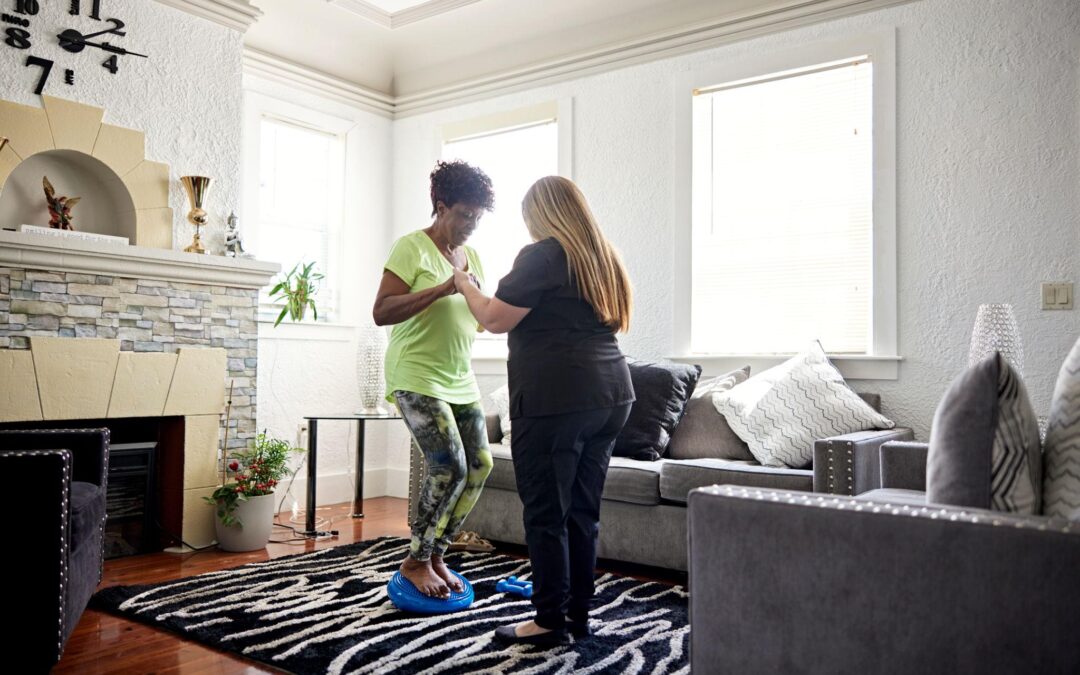
This article explains how fall prevention for seniors Connecticut helps families recognize early strength changes before spring activity leads to a serious setback, so aging loved ones can remain safe, supported, and comfortable at home.
TLDR: After winter inactivity, many older adults experience reduced balance and leg strength that increases fall risk. Connecticut families can watch for early warning signs, encourage simple daily movement, and seek caregiver support to help loved ones stay safer and more confident at home.
Why does spring increase fall risk for older adults?
Spring often brings more outdoor walking, errands, appointments, and social activity. While that increased movement can be positive, it can also reveal balance and strength changes that developed quietly during the winter months.
Many families do not notice these changes right away because they appear in small ways. A loved one may move more slowly, hesitate on stairs, or become tired more quickly outside the home. These shifts can be early signs that extra support is needed.
What warning signs should Connecticut families look for?
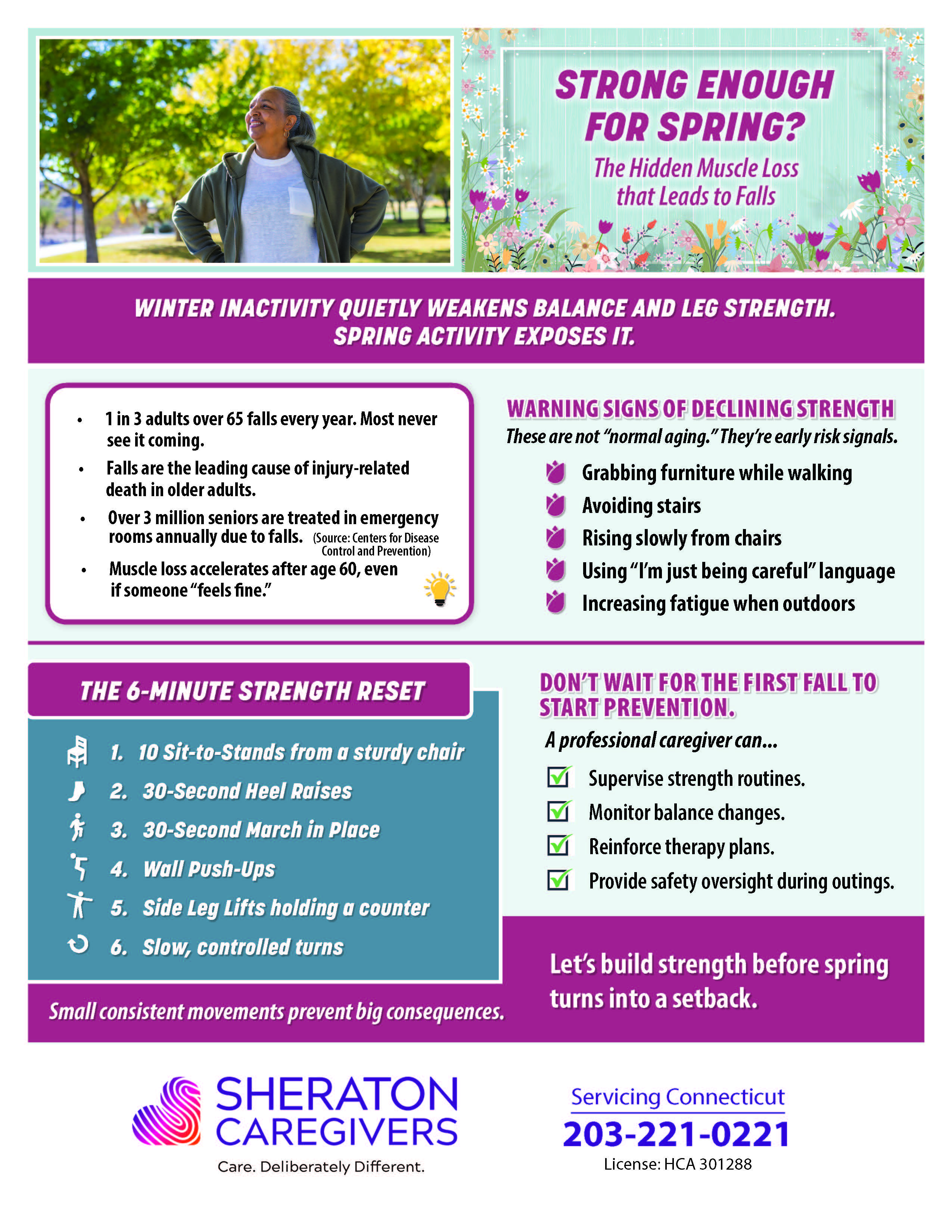
Some of the most common warning signs include grabbing furniture while walking, avoiding stairs, rising slowly from a chair, using cautious language about movement, and showing more fatigue during outings. These signs are often dismissed, but they may point to declining strength and a higher fall risk.
Recognizing these patterns early gives families a chance to act before a fall happens. Paying attention to daily mobility changes can make a meaningful difference in helping older adults remain safe and independent at home.
How does fall prevention for seniors Connecticut support safer movement at home?
A short daily routine can help older adults rebuild confidence and support safer mobility. Simple movements such as sit to stands from a sturdy chair, heel raises, marching in place, wall push ups, side leg lifts while holding a counter, and slow controlled turns may help improve stability and awareness.
These exercises should always be adapted to the person’s ability and comfort level. Families should focus on consistency, supervision when needed, and encouraging movement in a calm and supportive way.
How can professional caregivers help prevent spring falls?
Professional caregivers can provide valuable support by supervising strength routines, noticing mobility changes, reinforcing therapy recommendations, and offering safety oversight during outings or transitions around the home.
For many Connecticut families, having trusted help can reduce stress while giving older adults the encouragement they need to stay active. The goal is not only to respond after a fall, but to support safer routines before a major setback occurs.
When is it time to consider extra support at home?
If a loved one is becoming less steady, more hesitant with movement, or more fatigued during routine activities, it may be time to explore additional support. Small changes can become larger safety concerns when left unaddressed.
Families looking for in home care services in Connecticut often start by noticing these subtle changes in everyday life. Exploring professional caregiver support can help seniors continue aging safely at home with greater confidence and comfort.
For additional seasonal guidance, families can also review the CDC fall prevention resources to better understand common risks and prevention strategies.
When caring for an aging loved one becomes overwhelming, having reliable in home care support can make a meaningful difference.