

The dementia care journey Connecticut families experience often begins with small memory changes and can progress into more complex care needs. Understanding each stage helps aging loved ones stay safe, supported, and comfortable at home.
TLDR: The dementia care journey often starts with forgetfulness and confusion, then may progress into safety concerns, increased dependence, and full daily care needs. Understanding each stage helps Connecticut families respond earlier with routines, supervision, companionship, and in home support.
What Does the Dementia Care Journey Look Like?
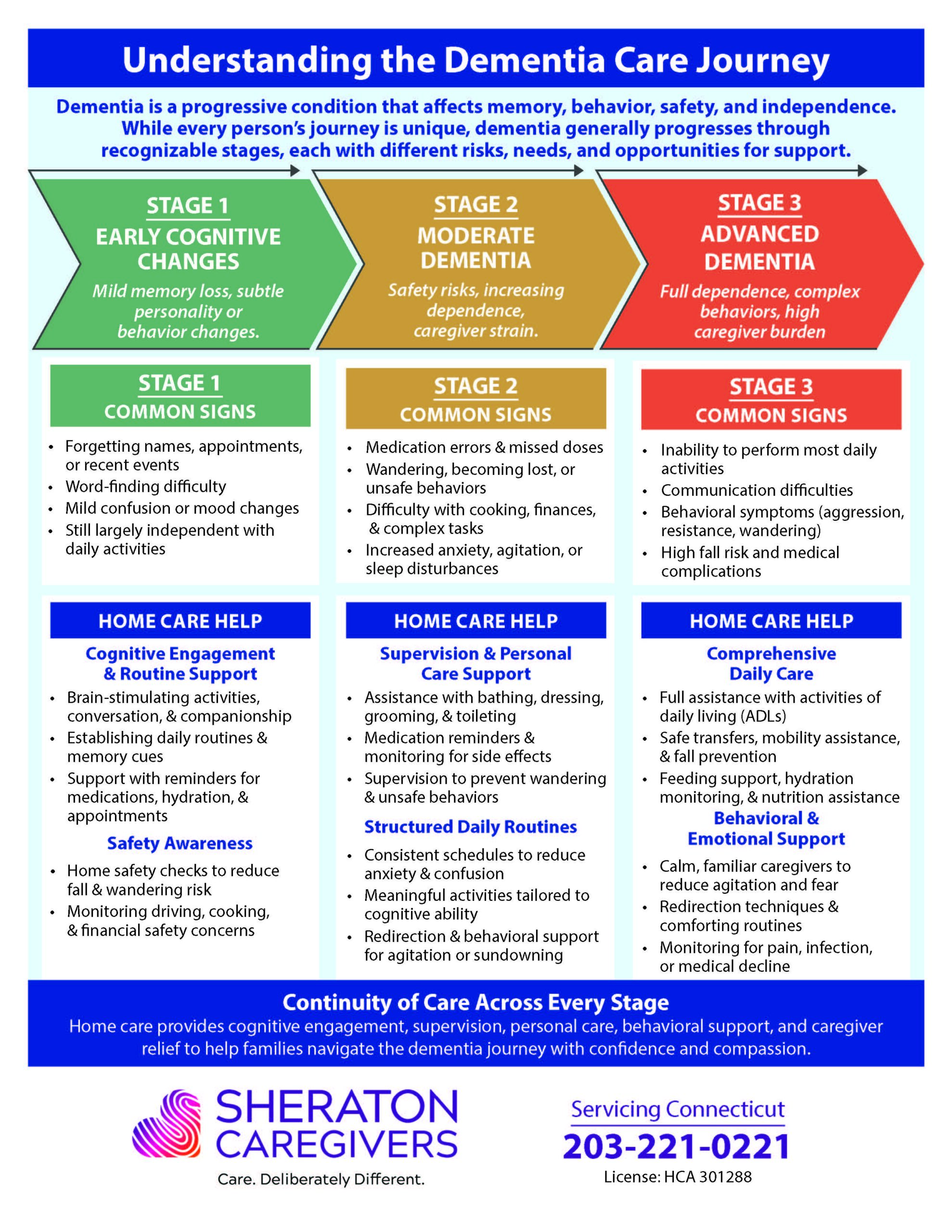
The dementia care journey is different for every family, but many loved ones move through recognizable changes over time. Early signs may include forgetting names, appointments, or recent events, mild confusion, and changes in mood or communication.
As dementia progresses, families may begin noticing difficulty with cooking, finances, medications, and other complex daily tasks. In later stages, a loved one may need full assistance with daily living, greater supervision, and consistent emotional reassurance to remain safe at home.
What Are the Early Signs Families in Connecticut May Notice?
In the earlier stage, a loved one may still be mostly independent, but there are often subtle signs that daily life is changing. They may repeat questions, miss appointments, struggle with word finding, or seem more easily overwhelmed than before.
This is often the right time for families to start building routines, using reminders, and introducing supportive conversations. Early awareness can make it easier to preserve confidence, reduce stress, and plan ahead before safety becomes a larger concern.
How the Dementia Care Journey Connecticut Families Face Changes Over Time
As the condition advances, families may see wandering, agitation, sleep disruption, unsafe decisions, medication issues, or the need for support with bathing, dressing, grooming, and toileting. These changes can create physical and emotional strain for everyone involved.
Each stage of the dementia care journey Connecticut families navigate brings different challenges, from mild confusion to full daily care needs.
At this stage, structured routines, supervision, personal care support, and meaningful daily engagement can help reduce confusion and improve comfort. Having familiar caregivers and a steady plan in place often helps older adults feel more secure in their home environment.
How Can In Home Care Help During the Dementia Care Journey?
Professional in home care services in Connecticut can provide support that matches a loved one’s changing needs. This may include companionship, cognitive engagement, medication reminders, home safety support, behavioral redirection, and hands on help with daily routines.
For families who need more regular assistance, professional caregiver support can help older adults remain in familiar surroundings while receiving steady, compassionate care. This kind of support can also relieve family caregivers who are balancing work, emotions, and ongoing responsibilities.
Why Do Routines and Familiar Support Matter So Much?
Dementia often affects more than memory. It can also affect behavior, confidence, emotional regulation, and a person’s sense of stability. Familiar routines, calm communication, and trusted caregivers can lower anxiety and help daily life feel more manageable.
Simple activities such as conversation, memory cues, favorite music, familiar meals, and a predictable daily structure can support connection and reduce distress. Families looking for more guidance may also find it helpful to read our related blog on emotional support for seniors at home.
Why Early Education Matters for Families
Learning about dementia early can help families recognize when care needs are shifting. The dementia care journey Connecticut families manage often becomes less overwhelming when there is a clear understanding of what changes may come next.
According to the Alzheimer’s Association, early support and planning can improve safety, reduce caregiver stress, and help individuals living with dementia remain more comfortable in familiar surroundings.
When Should Families Start Looking for Extra Support?
Many families wait until a crisis happens before asking for help, but support often works best when it begins earlier. Repeated confusion, wandering risk, missed medications, falls, or trouble with personal care are all signs that additional support may be needed.
When caring for an aging loved one becomes overwhelming, having reliable in home care support can make a meaningful difference. Families across Connecticut often reach out when memory changes start affecting safety, routines, and peace of mind at home.