

Caregiver fatigue Connecticut families experience often starts quietly through ongoing exhaustion, emotional stress, and disrupted daily routines. As caregiving responsibilities increase, it can become harder to maintain balance, protect personal wellbeing, and keep a loved one’s care consistent at home.
TLDR:
Caregiver fatigue can show up through constant exhaustion, poor sleep, irritability, forgotten tasks, and emotional stress. Recognizing these warning signs early helps Connecticut families take supportive action before caregiving becomes overwhelming or safety begins to suffer.
Introduction
Supporting an aging loved one at home can be deeply meaningful, but it can also become physically and emotionally demanding over time. Many family caregivers focus so fully on the person they love that they do not realize their own wellbeing is starting to decline.
For many families, caregiver fatigue develops gradually. What begins as a manageable routine can slowly turn into daily exhaustion, stress, frustration, and missed responsibilities. Recognizing caregiver fatigue Connecticut families face is an important step toward protecting both the caregiver and the senior receiving support.
What is caregiver fatigue?
Caregiver fatigue is the physical, mental, and emotional strain that can build when someone is consistently caring for a loved one without enough rest, relief, or support. It does not happen because someone is doing something wrong. It happens because caregiving can be demanding, especially when responsibilities continue growing over time.
Family caregivers often juggle medication reminders, meal preparation, personal care, transportation, safety supervision, household tasks, and emotional support while also managing their own responsibilities. Without enough help, that ongoing pressure can begin affecting health, mood, and decision making.
What are the warning signs of caregiver fatigue Connecticut families should notice?
The signs of caregiver fatigue are often subtle at first. A caregiver may feel tired all the time, struggle to sleep, become more irritable, feel emotionally drained, or lose patience more quickly than usual. In some cases, they may begin forgetting appointments, medication routines, or important daily tasks.
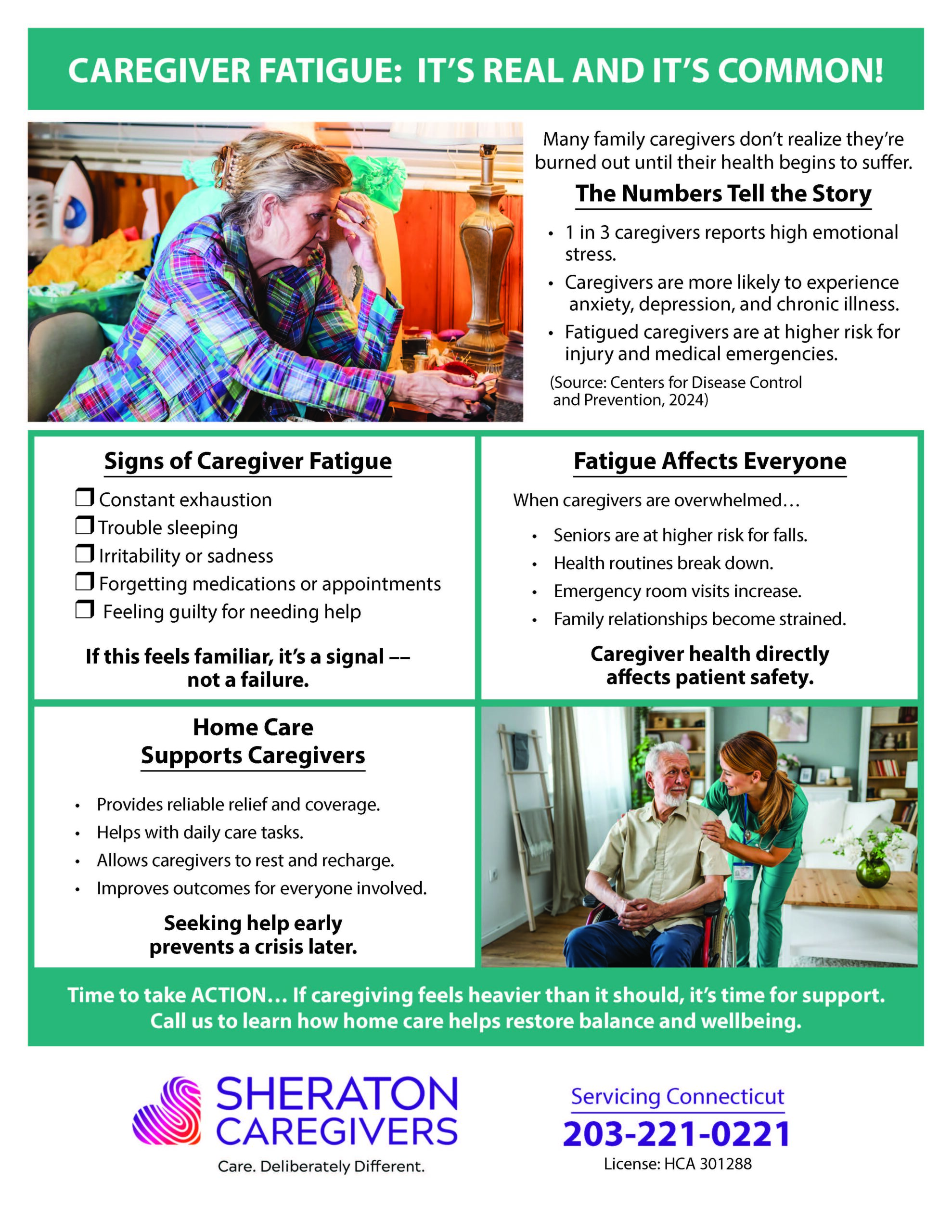
Other signs can include feeling overwhelmed, withdrawing from others, losing motivation, skipping self care, or feeling guilty for needing help. These changes matter because they can affect not only the caregiver’s health, but also the consistency and quality of care being provided at home.
How does caregiver fatigue affect daily life at home?
When caregiver fatigue builds, routines that once felt manageable can start falling apart. Meals may become less consistent, medication reminders may be delayed, appointments may be forgotten, and the household may begin feeling more stressful and unstructured.
For seniors, this can increase the risk of missed care, isolation, and safety concerns. For families, it can create tension and emotional strain. Understanding caregiver fatigue Connecticut families experience can help prevent these early warning signs from becoming larger problems.
Why do family caregivers wait too long to ask for help?
Many caregivers feel that asking for help means they are not doing enough. Others believe they should be able to manage everything on their own because they care deeply about their loved one. In reality, reaching out for support is often one of the most responsible and protective steps a family can take.
Getting help early can reduce stress, improve routines, and make caregiving feel more sustainable. It also gives families more time to make thoughtful decisions instead of waiting until exhaustion or a crisis forces immediate change.
What support can help reduce caregiver fatigue?
Support can look different for every family. Sometimes it means having someone assist with personal care, companionship, meal preparation, mobility support, or supervision during the day. In other cases, it means giving a family caregiver time to rest, work, attend appointments, or simply recharge.
Families exploring in home care services in Connecticut often find that reliable support helps restore structure, reduce stress, and create safer daily routines. For those who need flexible help, hourly in home care can provide meaningful relief while helping seniors remain comfortable at home.
For additional caregiver support information, families can review resources from the CDC caregiver support guidance. If your family has also noticed changes in memory and routine, you may find it helpful to read memory loss signs Connecticut families notice.
Conclusion
Caregiver fatigue can build slowly, but its effects can become serious for both the caregiver and the loved one relying on them. Constant exhaustion, emotional stress, poor sleep, and missed routines are signs that more support may be needed.
Recognizing caregiver fatigue Connecticut families face gives loved ones the chance to take action early, reduce stress, and create a healthier care routine at home. The right support can make caregiving feel more manageable while protecting comfort, safety, and peace of mind for everyone involved.