

This article explains how caregiver burnout support in Connecticut helps Connecticut families manage stress while aging loved ones remain safe, supported, and comfortable at home.
TLDR
If caregiving feels nonstop, a simple weekly care plan can reduce burnout by making routines clear and shared. List daily needs like meals, medications, hygiene, errands, and evening safety checks, then assign who is responsible. When gaps appear, professional in home care support can provide consistency and relief.
Introduction
Caregiving often starts with love and urgency. Families step in quickly, handle what they can, and keep going day after day. The problem is that the caregiver clock never stops, and without structure, stress builds quietly until it becomes burnout.
A care plan turns chaos into calm by defining what care is needed, when it is needed, and who will provide it. When the plan is clear, families feel less overwhelmed and seniors get more consistent support.
This type of caregiver burnout support in Connecticut helps families stay organized while ensuring seniors receive consistent and compassionate care at home.
What are common signs of caregiver burnout?
Caregiver burnout often shows up as mental overload, frustration, exhaustion, or feeling like you cannot step away. Even when everything is getting done, it can feel like the day is always one missed task away from falling apart.
If you notice stress rising each week, it is a sign that responsibilities may need to be clarified, shared, or supported. A structured routine is not about perfection. It is about relief and predictability.
According to the Family Caregiver Alliance, ongoing stress without support is one of the leading contributors to caregiver burnout.
Why does a weekly care plan reduce stress so quickly?
A structured plan helps clarify daily care needs, from meals to medication reminders, and it coordinates responsibilities between family, friends, and professionals. When everyone knows what is happening and who is covering it, the day feels more manageable.
This also protects seniors. Routines like hydration checks, hygiene support, and evening safety steps are easier to complete consistently when they are written into the week.
What should a weekly home care planning chart include?
Start with the routine items that repeat most often:
- Morning medication and breakfast
- Bathing and grooming
- Meal prep and hydration checks
- Light housekeeping and laundry
- Grocery shopping and errands
- Social visits and engagement
- Exercise or therapy support
- Doctor appointments and follow ups
- Evening meal and safety check
- End of day routine and lights out
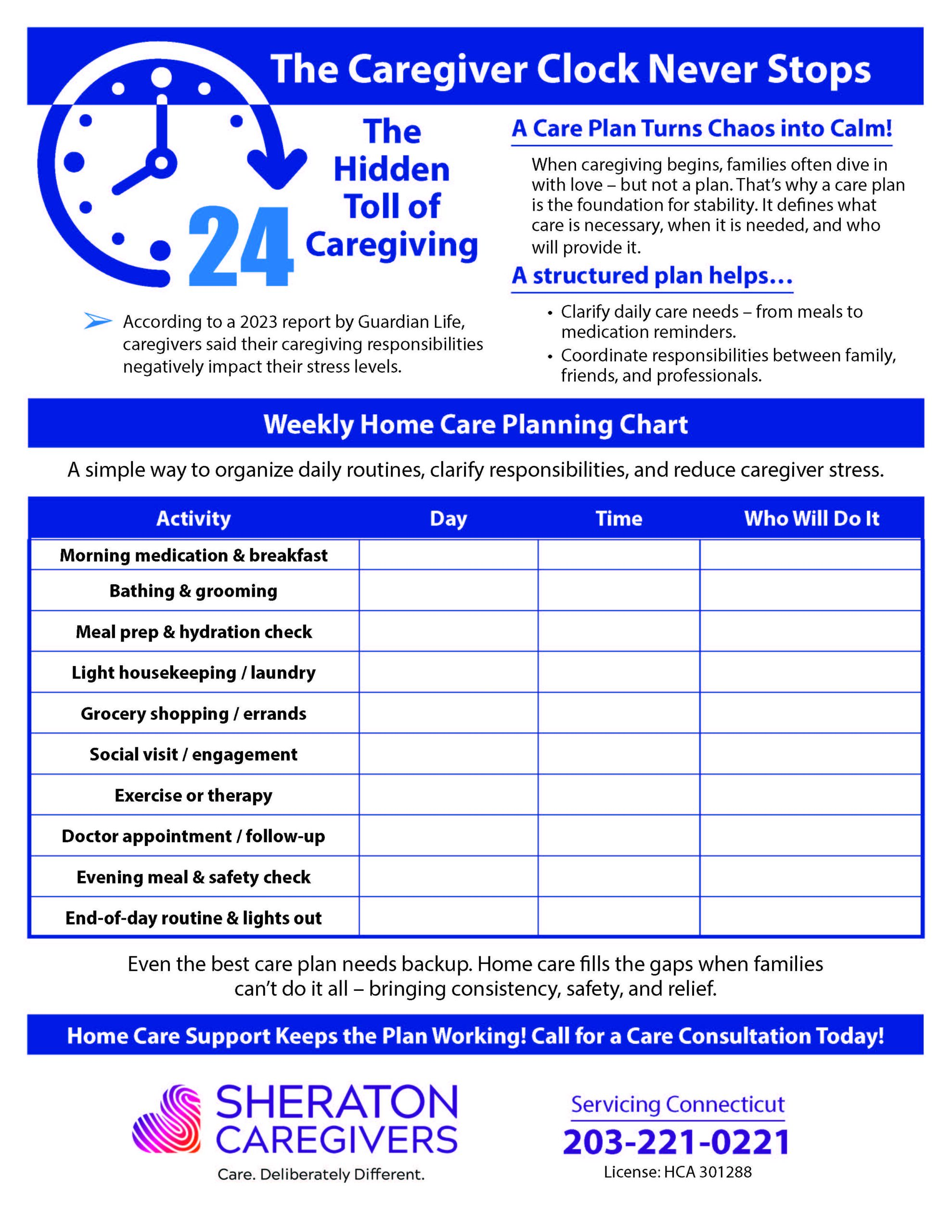
Then add four columns to make it actionable: Activity, Day, Time, and Who will do it. This single step reduces confusion and prevents last minute scrambling.
When should families seek caregiver burnout support in Connecticut?
Even the best care plan needs backup. Home care fills the gaps when families cannot do it all, bringing consistency, safety, and relief. If your weekly plan shows repeated gaps, missed rest time, or tasks that one person is carrying alone, it may be time to add professional help.
Learn more about in home care services in Connecticut and how support can be scheduled around your routine. You can also explore hourly in home care for targeted help during the busiest parts of the day.
Related read: Senior health checklist for Connecticut families
Soft next step
Families across Connecticut often reach out when caregiver stress starts affecting daily routines. Support is available. A weekly care plan is a strong first step, and reliable in home care can make that plan sustainable.