

This article explains how senior warning signs Connecticut families should watch for can help prevent small changes from turning into falls, ER visits, or hospitalizations.
TLDR:
Small changes in energy, memory, appetite, balance, or daily routines can be early warning signs that a senior may need more support at home. Recognizing these signs early can help Connecticut families respond before safety risks increase.
Why Do Small Changes Matter for Seniors?
A senior crisis does not always happen suddenly. Many times, it starts with small changes that are easy to miss or explain away.
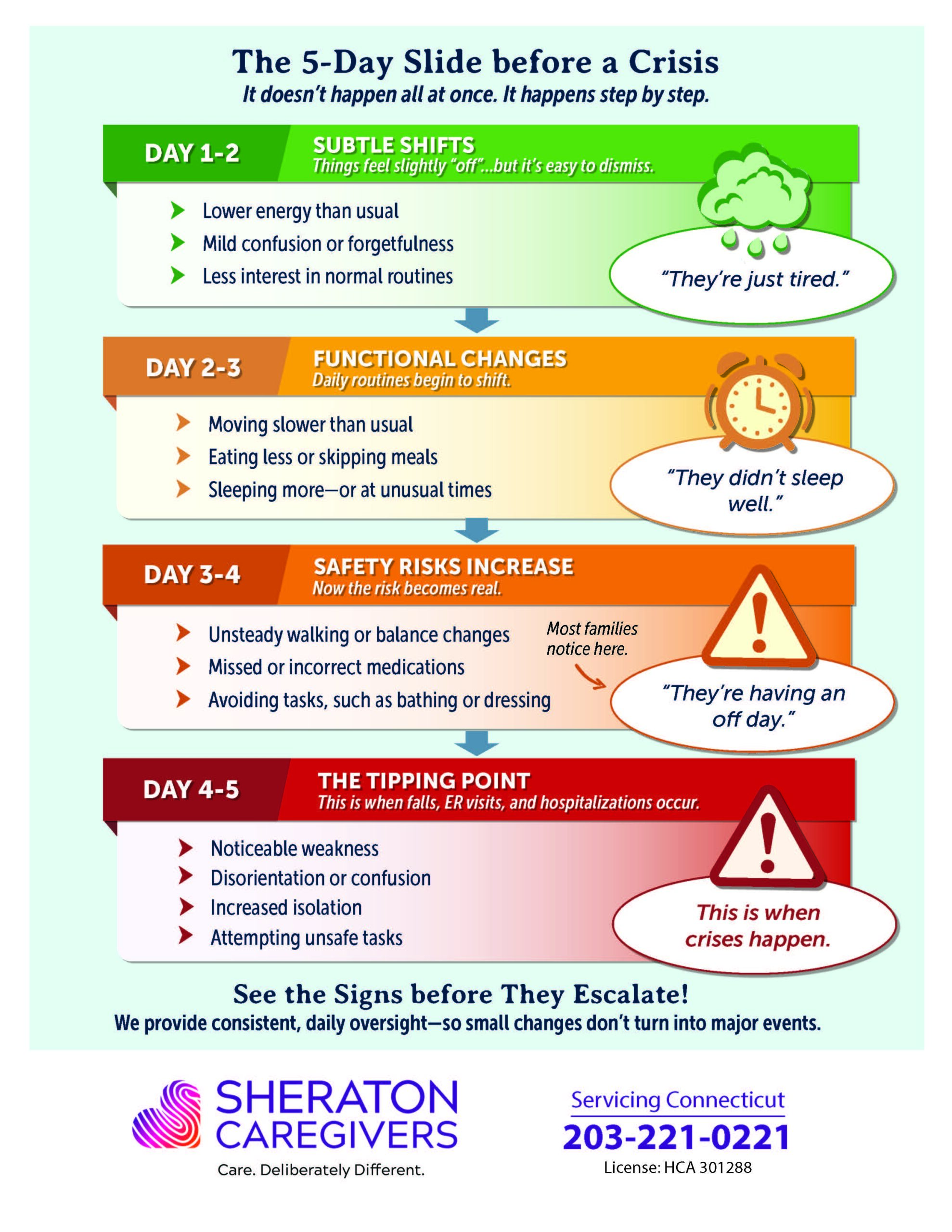
Lower energy, mild confusion, less interest in normal routines, or moving slower than usual may seem like a regular off day. But when these signs continue, they can point to a bigger change in health, safety, or daily functioning.
What Are Senior Warning Signs Connecticut Families Should Watch For?
Families should watch for changes such as eating less, sleeping more than usual, missing medications, walking unsteadily, or avoiding personal care tasks like bathing or dressing.
These changes may show that a loved one is having trouble managing their normal routine safely at home. Acting early can help reduce stress and prevent a situation from becoming more serious.
When Do Senior Warning Signs in Connecticut Become Safety Risks?
Safety risks often increase when changes begin to affect mobility, medication routines, hygiene, nutrition, or decision-making.
This is often the point when falls, confusion, isolation, or unsafe tasks become more likely. For many Connecticut families, this is when they realize their loved one may need more consistent oversight.
You can also review fall prevention tips from the National Institute on Aging.
How Can In Home Care Help Prevent a Crisis?
Professional caregivers can provide daily support, help monitor routine changes, and assist with personal care, meals, mobility, and companionship.
For families looking for in home care services in Connecticut, having support in place can help loved ones remain safer and more comfortable at home.
Hourly support may also be helpful when families notice changes but do not yet need full-time care. Learn more about hourly in home care in Connecticut.
What Should Families Do When Something Feels Off?
Do not ignore small changes, especially if they continue for several days. Write down what you notice, check medication routines, look for changes in eating or sleeping, and talk with a healthcare provider if needed.
Families across Connecticut often reach out when these changes start affecting daily routines. Support is available before a crisis happens.