

This article explains how caregiver stress can affect Connecticut families and how support at home can help aging loved ones remain safe, comfortable, and cared for.
TLDR:
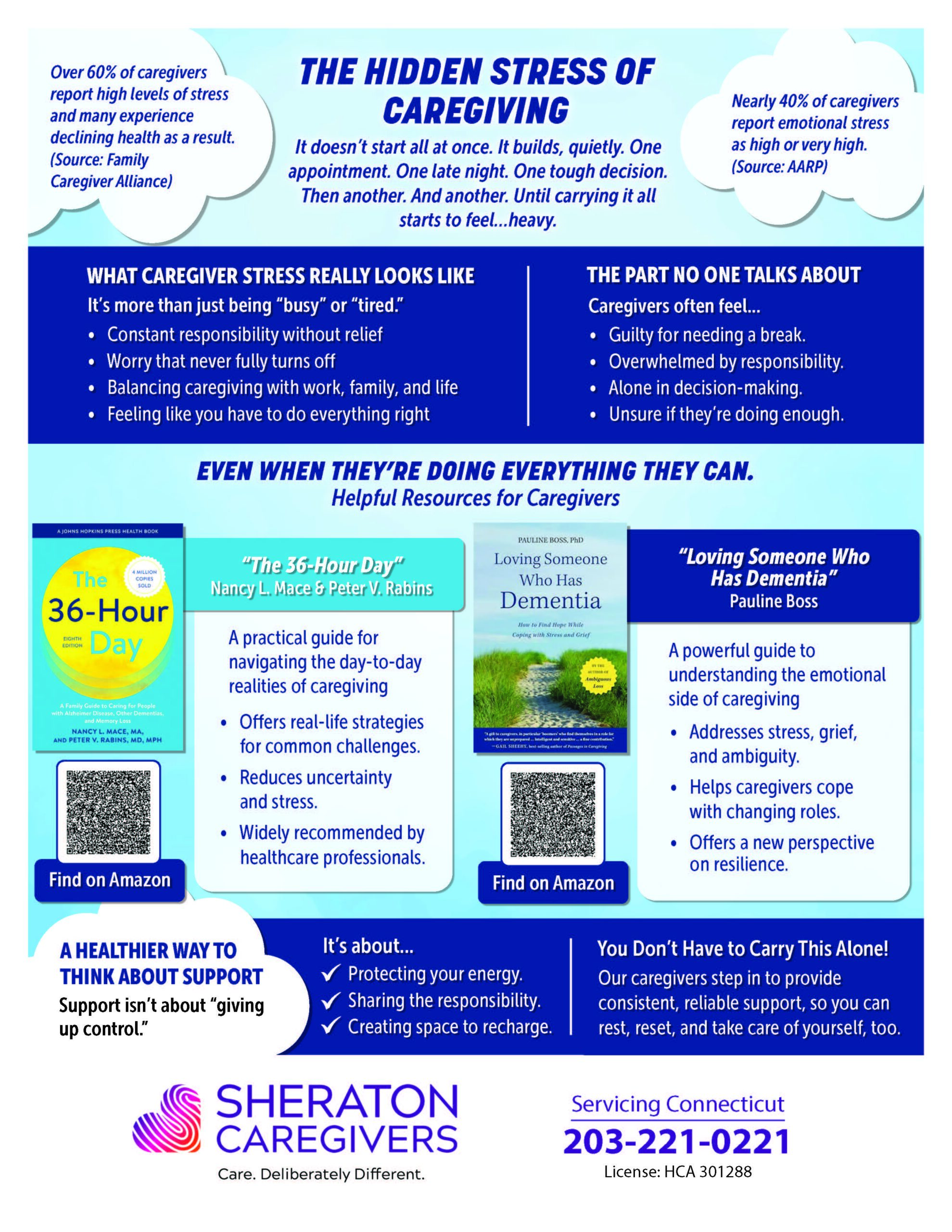
Caregiver stress can build slowly through daily responsibilities, late nights, appointments, and constant decision-making. Support at home can help families share responsibilities, reduce emotional pressure, and feel less alone while caring for an aging loved one.
Why Caregiver Stress Can Build Over Time
Caregiving does not always feel overwhelming at first. It often starts with small tasks, such as helping with appointments, meals, medication reminders, or daily routines.
Over time, these responsibilities can become harder to manage, especially when families are also balancing work, household needs, and their own personal lives.
What Stress Can Look Like for Family Caregivers
Stress is more than just feeling busy or tired. It can show up as constant worry, emotional exhaustion, guilt, or feeling like there is never enough time to rest.
The Family Caregiver Alliance shares helpful information about how caregiving can affect health and well-being.
- Feeling emotionally drained
- Worrying even when not actively providing care
- Balancing caregiving with work and family
- Feeling alone in decision-making
- Feeling guilty for needing help
How Caregiver Stress Support Helps Families
Support at home gives families a way to share responsibilities instead of carrying everything alone. It can help create time to rest, reset, and focus on the relationship with a loved one.
A professional caregiver can assist with daily routines, companionship, personal care, safety supervision, and other needs that help seniors remain supported at home.
How In Home Care Supports Connecticut Families
For many families, in home care services in Connecticut provide practical support when caregiving responsibilities become difficult to manage alone.
Flexible options like hourly in home care in Connecticut can help with daily routines while allowing seniors to remain comfortable at home.
When Families Should Consider Extra Support
It may be time to consider help when caregiving begins to affect sleep, work, emotional well-being, or personal health.
It may also be time to ask for help when a loved one needs more supervision, more hands-on assistance, or a more consistent routine.
Families can also explore related guidance on aging safely at home and ways to stay supported.
Final Thoughts
Caregiving can be meaningful, but it can also be demanding. No family should feel like they have to carry every responsibility alone.
When caring for an aging loved one becomes overwhelming, having reliable in home care support can make a meaningful difference.