

This article explains how decision fatigue in caregivers affects Connecticut families when daily care decisions become overwhelming, stressful, and difficult to manage at home.
TLDR:
Decision fatigue in caregivers happens when family members feel mentally drained from making constant care decisions. For Connecticut families, support at home can help reduce stress, share responsibility, and make daily care feel more manageable.
What Is Decision Fatigue in Caregivers?
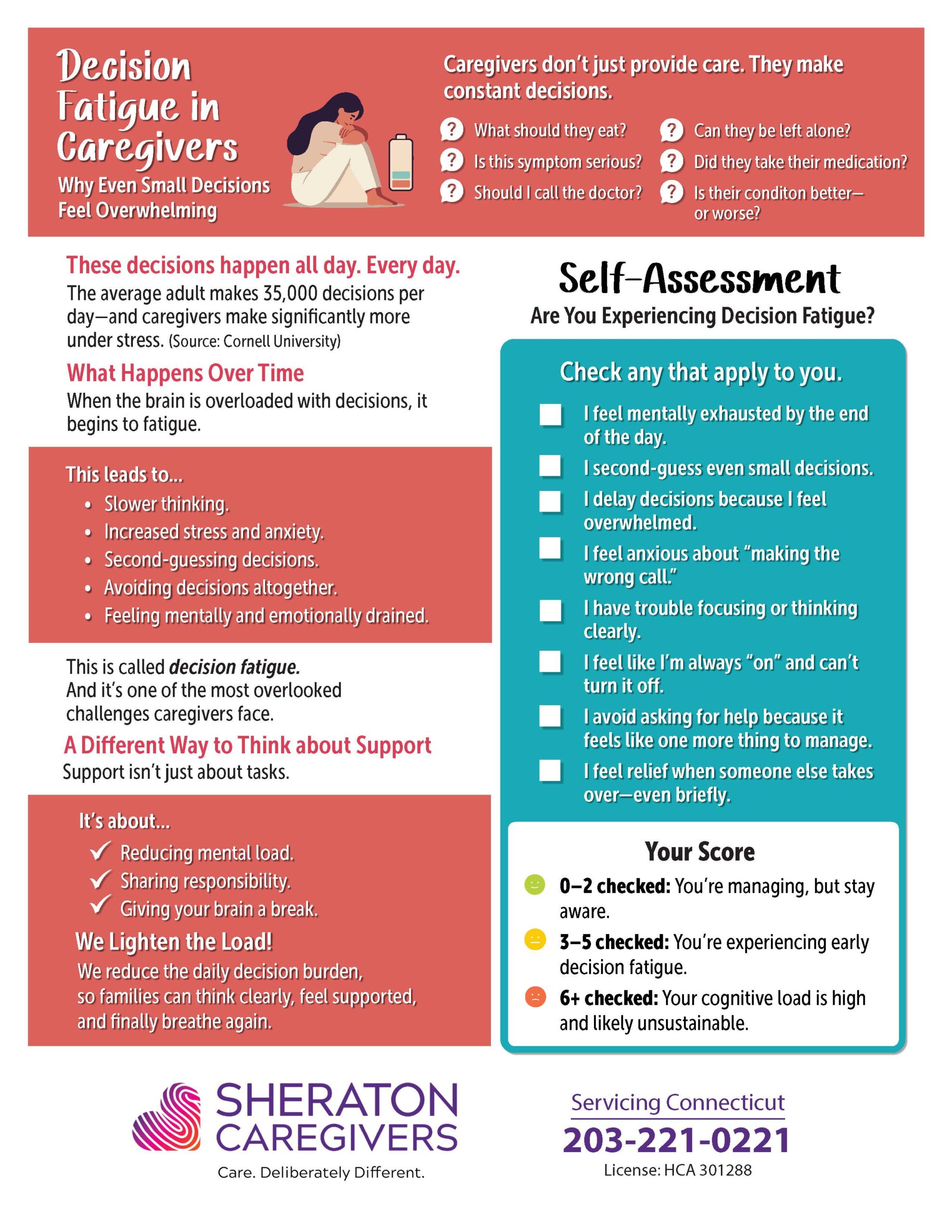
Decision fatigue in caregivers happens when the brain becomes overloaded from making too many care-related choices throughout the day. These choices may include meals, medication reminders, doctor calls, safety concerns, appointments, and daily routines.
Caregivers do not only provide physical help. They are often responsible for thinking ahead, noticing changes, and deciding what needs to happen next. Over time, this can become emotionally and mentally exhausting.
Why Daily Care Decisions Can Feel Overwhelming
Small decisions can add up quickly. A caregiver may wonder if their loved one ate enough, took the right medication, needs medical attention, or can be safely left alone for a short period of time.
When those questions happen all day, the mental load can become heavy. This can lead to slower thinking, second-guessing, stress, anxiety, and feeling mentally drained by the end of the day.
Signs of Decision Fatigue in Caregivers
Some signs of decision fatigue in caregivers may include feeling exhausted, avoiding decisions, worrying about making the wrong choice, having trouble focusing, or feeling like you are always “on.”
Many families do not recognize these signs right away. They may think they are just tired, but the real issue may be the constant responsibility of making care decisions without enough support.
How Support at Home Can Help
Support at home can help reduce the pressure on family caregivers. A professional caregiver can assist with daily routines, companionship, personal care, safety reminders, and other everyday needs.
This type of support can help families feel less alone and more organized. Learn more about in home care services in Connecticut and how care at home can support families through daily challenges.
When Should Families Consider Extra Help?
Families may want to consider help when caregiving starts affecting sleep, work, patience, focus, or emotional well-being. Even a few hours of support can make a meaningful difference.
For families who need flexible help, hourly in home care can provide support while helping seniors remain safe and comfortable at home.
Reducing Decision Fatigue in Caregivers Starts With Support
Decision fatigue in caregivers can affect the whole family. When the mental load becomes too much, having reliable care support can help bring relief, structure, and peace of mind.
Families across Connecticut often reach out when caregiving starts affecting daily routines and emotional energy. Support is available.
For additional caregiver resources, visit CDC caregiving resources.