

This article explains how senior depression support in Connecticut helps families recognize early signs of depression, protect physical health and recovery, and add companionship that improves daily routines at home.
Introduction To Senior Depression Support In Connecticut
Senior depression support in Connecticut is especially important after the holidays, when some older adults become quieter, less engaged, and more isolated. Depression in seniors may not look like sadness. It can show up as withdrawal, low energy, missed routines, or loss of interest. When families notice these changes early, they can respond with practical support that improves emotional wellbeing and safety at home.
Why Depression Can Affect Health And Recovery
Depression does not only affect mood. It can impact physical health, recovery, and longevity. Seniors who are struggling may be more likely to skip medications, decline faster after illness or surgery, and experience higher hospitalization rates. If you are unsure what you are seeing, a healthcare provider can help guide next steps and screening.
Early Signs For Senior Depression Support In Connecticut
Look for these changes that may indicate depression or worsening isolation:
- Loss of interest: Less interest in hobbies, calls, or visits
- Sleep changes: Sleeping too much or too little
- Skipped meals or medications: Missed routines that can affect health
- Low energy or irritability: Less motivation, more frustration, or feeling on edge
- Withdrawal: Avoiding family, friends, or faith activities
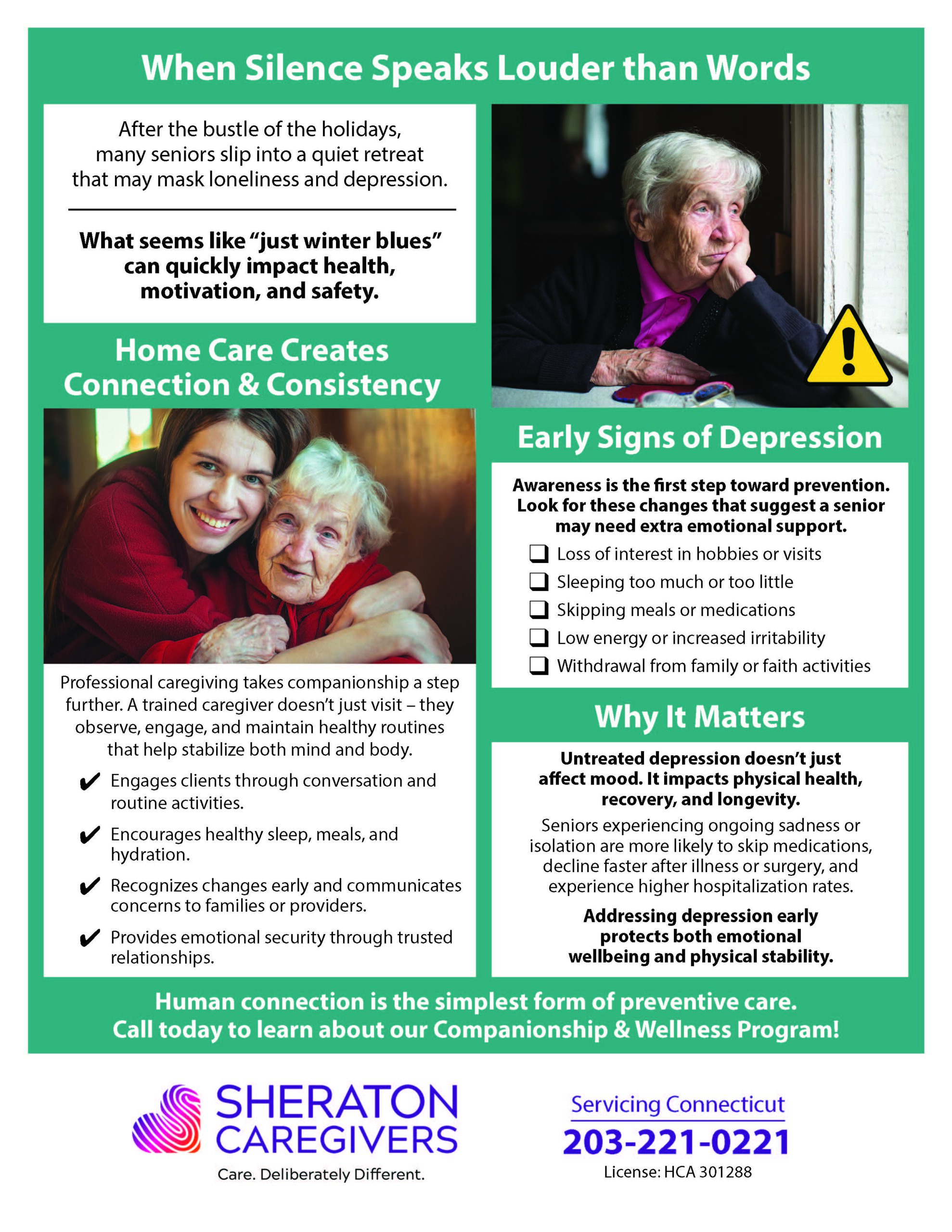
How In Home Care Supports Emotional Wellbeing In Seniors
Human connection is a powerful form of support. Consistent check ins can help seniors feel less alone and help families notice changes sooner. Daily structure also matters. Regular meals, hydration, activity, and sleep routines can support emotional wellbeing and reduce day to day stress.
How In Home Care Helps Senior Depression Support In Connecticut
Professional care adds another layer of reliability. A trained caregiver can observe patterns, engage the client, and reinforce routines that support both mind and body.
- Conversation and engagement: Encouraging interaction and participation in daily life
- Routine support: Helping with meals, hydration, and consistent sleep habits
- Early recognition: Noticing changes and communicating concerns to families or providers
- Peace of mind: Knowing someone is present and attentive
Get Support From Sheraton Caregivers
Sheraton Caregivers provides personalized senior depression support in Connecticut through companionship focused care and in home support. Learn more about our in home care services, explore who we are, or contact our team to discuss a care plan.
Helpful Outbound Resource On Depression And Older Adults
For additional education on depression and older adults, visit the National Institute on Aging.