
TLDR
This article explains essential senior fire safety steps that help older adults stay safe at home. It provides a simple fire safety checklist, highlights common risks in the home, and explains how Sheraton Caregivers supports families with safe, consistent in home care.
Introduction
Senior fire safety is an important part of keeping older adults safe in their homes, especially for those who want to age in place. Simple changes such as checking smoke alarms, clearing walkways, and planning quick exits make emergencies easier to handle. In addition, caregiver support helps families stay consistent with safety routines and long term habits.
Why Fire Safety Matters for Older Adults
Older adults face higher risks during a home fire due to slower movement, reduced hearing or vision, and difficulty reacting quickly. In addition, many seniors rely on oxygen or medical equipment that requires extra caution. As a result, having a clear safety plan helps prevent harm and supports independence.
Common Home Fire Risks for Seniors
Many fire hazards come from everyday items and can be easy to miss until they cause a problem. For example, small issues such as cluttered pathways or loose wires can grow into larger safety concerns if left unaddressed. Because of this, regular walkthroughs play a key role in keeping the home safe.
- Missing or Nonworking Smoke Alarms: Alarms without batteries or older than 10 years.
- No Carbon Monoxide Detectors: A major risk for homes with gas appliances or furnaces.
- Blocked Pathways and Exits: Clutter or rugs that slow mobility or block safe exits.
- Unsafe Heating Sources: Space heaters placed too close to bedding or curtains.
- Kitchen Hazards: Unattended cooking or flammable items near stovetops.
- Candles and Decorations: Open flames or old light strings with frayed wiring.
- Oxygen Equipment: Tanks placed near candles, smoking, or heat sources.
Advantages and Challenges of Creating a Safety Plan
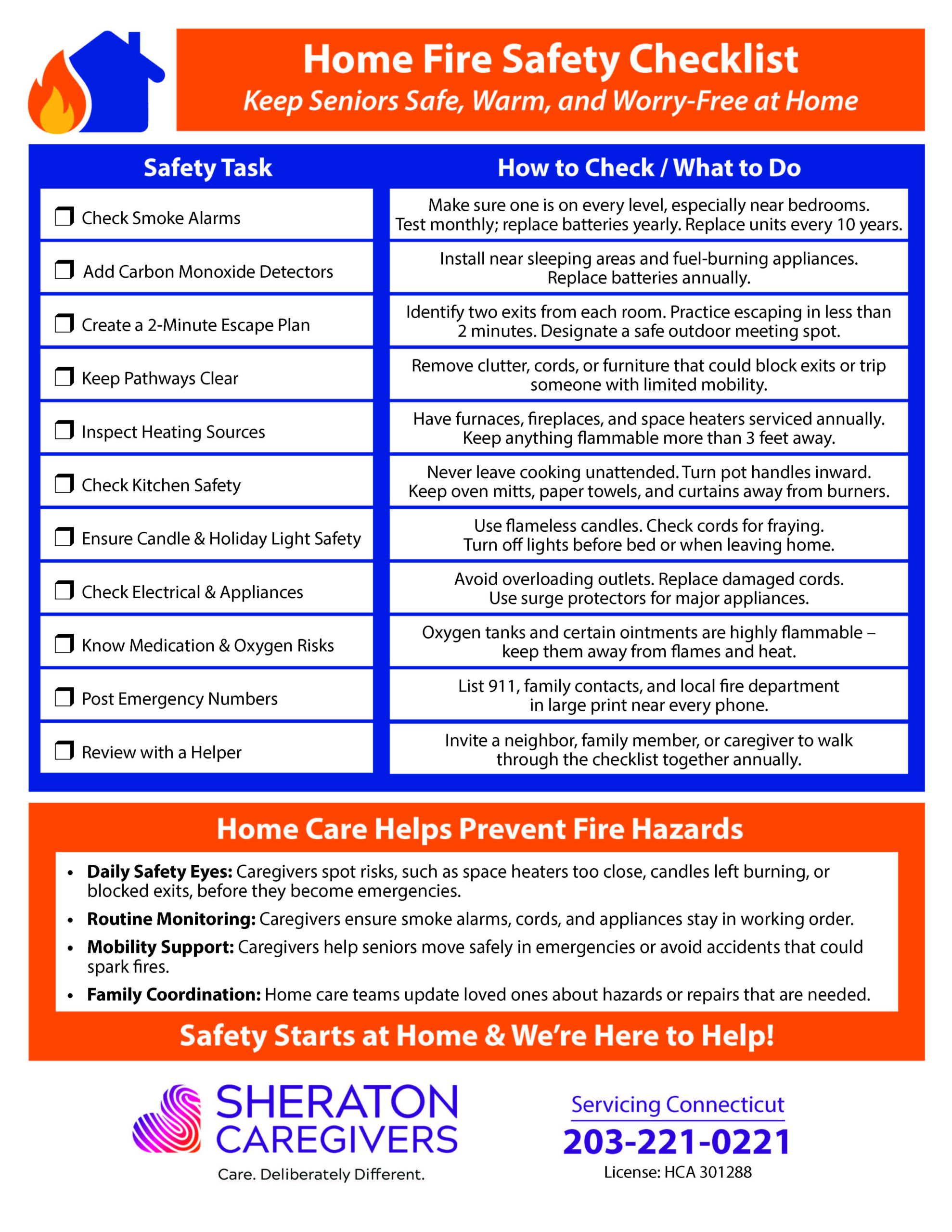
A simple safety checklist is very effective, but families may feel unsure where to begin. Therefore, understanding both the benefits and the challenges makes it easier to create a clear and supportive plan. As a result, families feel more confident when addressing safety concerns.
Core Steps:
- Test Smoke Alarms: Replace batteries and update older alarms.
- Add Carbon Monoxide Detectors: Install near bedrooms and appliances.
- Clear Escape Routes: Ensure pathways support walkers or wheelchairs.
- Check Heating and Electrical Use: Inspect cords, outlets, and heater placement.
- Create a Short Escape Plan: A two minute exit route and outdoor meeting point.
Benefits vs Challenges
Pros:
- Improved Peace of Mind: Families follow a structured checklist instead of guessing.
- Faster Emergency Response: Seniors and caregivers know exactly where to go.
- Safer Everyday Routines: Clear walkways and safer heating habits.
- Care Team Alignment: Families and caregivers follow the same plan.
Cons:
- Time Investment: Requires a full home walkthrough.
- Adjustment Challenges: Some seniors feel uneasy with changes.
- Possible Costs: New detectors or electrical updates.
Practical Solutions for Families
Additionally, small adjustments made over time can greatly improve safety and help seniors feel more confident at home. For instance, updating one area per week helps families stay on track without feeling overwhelmed.
- Start Small: Walk through one part of the home at a time.
- Address Major Risks First: Focus on alarms, exits, and heating safety.
- Use Supportive Language: Present changes as protection, not criticism.
- Break Tasks Into Steps: Update one area per week for easier progress.
- Get Professional Support: Electricians and care teams can help with complex issues.
How Caregivers Help With Fire Prevention
During everyday visits, trained caregivers observe safety hazards that may go unnoticed by family members. For example, they may spot cluttered exits, unsafe heaters, or beeping alarms. In addition, caregivers can help seniors practice safe movement and reinforce daily routines that reduce risk.
- Monitoring the Environment: Watching for cluttered walkways or unsafe heating setups.
- Supporting Emergency Planning: Helping seniors move safely with mobility aids.
- Communicating With Families: Reporting issues like damaged cords or expired alarms.
- Encouraging Safe Habits: Turning off heaters, blowing out candles, and avoiding unattended cooking.
For additional safety guidance, visit NFPA Home Fire Safety.
Next Steps
Choose one part of your home safety plan to complete this week, such as testing alarms or clearing walkways. If your loved one receives in home care from Sheraton Caregivers, ask the team to help review the home and support a simple, effective safety routine.