

Building A Bridge Between Families, Providers, And Caregivers
TLDR: Home care can act as the bridge that keeps families, providers, and caregivers connected so older adults in Connecticut can stay safe and supported at home. This vlog style post walks through what that looks like in real life and how a home care bridge supports everyone on the care team.
Why We Talk About Home Care As A Bridge
When we first meet families, we often hear the same story. Everyone cares deeply about the older adult, but the care itself feels scattered. There are office visits, new prescriptions, therapy orders, and instructions from different providers. In the middle of it all, a son or daughter is trying to keep track of everything while juggling work and family life.
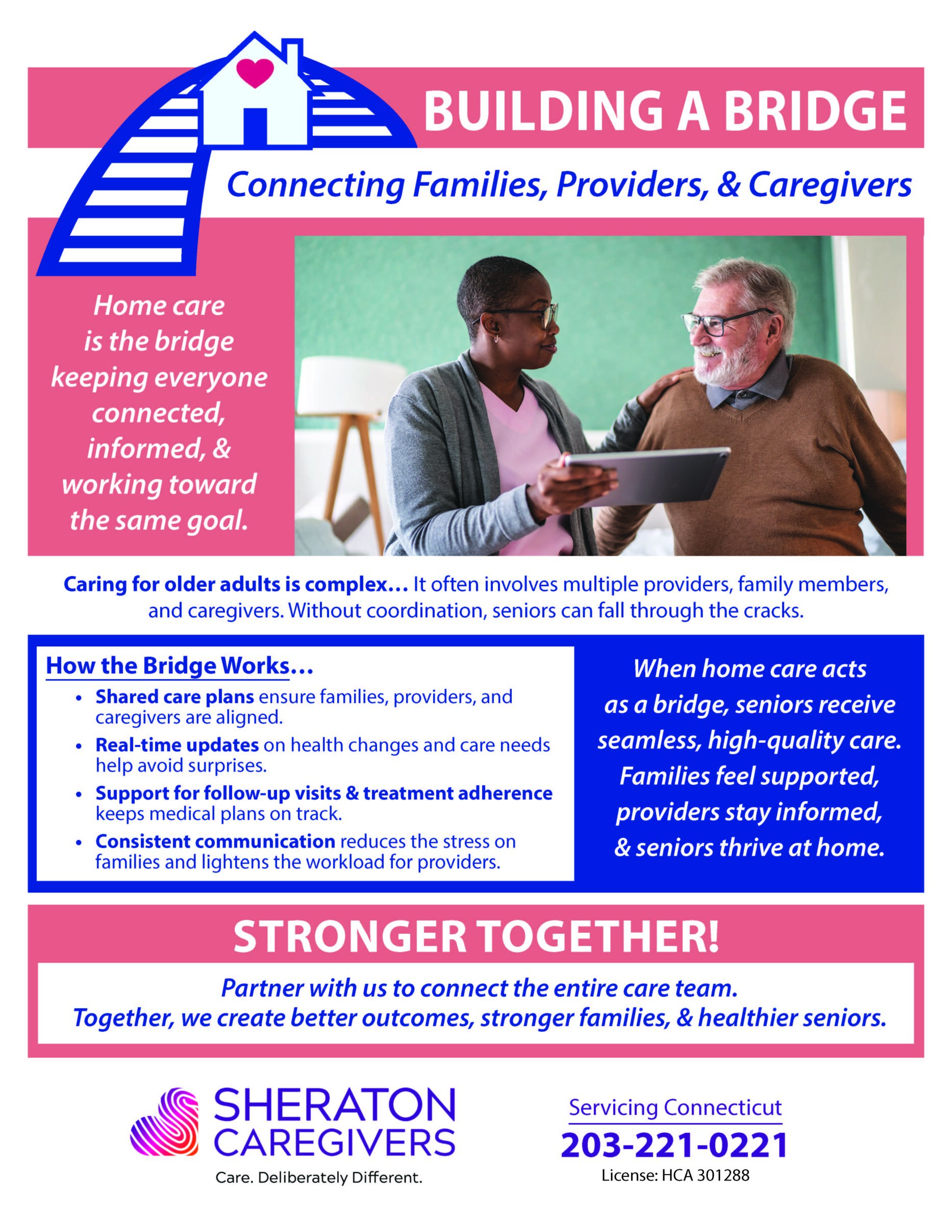
This is why we describe home care as a bridge. Our team steps into the home and connects what is happening in real life with what the care team has planned on paper. The goal is simple. Keep everyone informed, reduce stress for families, and help seniors stay where they want to be at home with a strong home care bridge around them.
Inside A Typical Bridge Day With Sheraton Caregivers
Picture a weekday morning with one of our clients. A caregiver arrives and reviews the shared care plan. In that plan are details from the primary care provider, notes from a recent hospital stay, and preferences from the family about daily routines, safety considerations, and personal likes and dislikes.
During the visit, the caregiver notices that the client seems a little more tired than usual and is not finishing breakfast. Blood pressure is checked, medications are confirmed, and a short update is sent back to the office. When needed, that update is shared with the provider so the change is on their radar early.
Later in the day, our office team helps confirm a follow up appointment, arranges transportation support if needed, and makes sure the family knows what to expect. The bridge is not a single person. It is the way everyone shares information across the client day.
How The Bridge Helps Families
Families often tell us that before home care, they felt like they had to be everywhere at once. At work but also on the phone with a doctor office. At home with kids but also worried about whether a parent took their medications or ate a meal. The emotional and mental load can become overwhelming.
With a bridge in place, families gain:
- Clear care plans that explain who is doing what and when.
- Real time updates when something changes at home.
- Support for follow up visits, lab work, and treatment instructions.
- A team they can call when they are not sure what to do next.
Instead of trying to manage everything alone, families have a partner walking alongside them. That support helps reduce burnout and allows family members to spend more time simply being a son, daughter, or spouse again.
How The Bridge Supports Providers And Facilities
Providers and facility teams are under constant pressure to keep patients safe while managing heavy caseloads and complex systems. One of the biggest gaps happens after the client leaves the building and returns home. That is where small problems can grow into bigger issues if no one is watching closely.
Home care fills that gap by:
- Reinforcing discharge instructions and care plans in the home.
- Watching for early changes in condition and reporting them quickly.
- Helping clients follow through with medications and appointments.
- Sharing clear information so providers can adjust care before a crisis.
When providers know what is happening at home, they can make better decisions and help avoid preventable setbacks like emergency room visits or hospital readmissions. Learn more about aging and home safety from the Connecticut Department of Public Health.
A Real Connecticut Story
One Connecticut family came to us after several stressful months. Their father had been in and out of the hospital. Each time he went home, the family tried to keep up with new instructions while managing their own jobs and children. Everyone felt worried, tired, and unsure what might happen next.
Once home care services started, our team built a bridge around him. The caregiver monitored how he was doing each day. Our office team checked in with the family regularly. Providers received timely updates when anything changed. Over the next several months, he remained stable at home, and the family reported feeling more confident and less alone.
What A Home Care Bridge Really Means For Connecticut Families
When families, providers, and caregivers work in isolation, everyone carries more weight and important details can slip by. When we work together as a connected care team, clients receive seamless care and the people around them feel supported.
That is what we mean when we say stronger together. A bridge is only strong when every part is in place. In the same way, client outcomes improve when every member of the care team is informed, respected, and heard and a reliable home care bridge connects everyone.
How To Build Your Own Bridge With Sheraton Caregivers
If you are a family caregiver, a provider, or a facility leader in Connecticut, we invite you to reach out and talk with us about your situation. We will listen first, then help design a home care plan that supports the client, the family, and the broader care team. For families looking for more details, visit our Home Care Services page to learn more about options in Connecticut.
Call us at 203 221 0221 or contact us through our website to schedule a conversation. Together, we can build a bridge that keeps the people you care about safe, connected, and thriving at home.